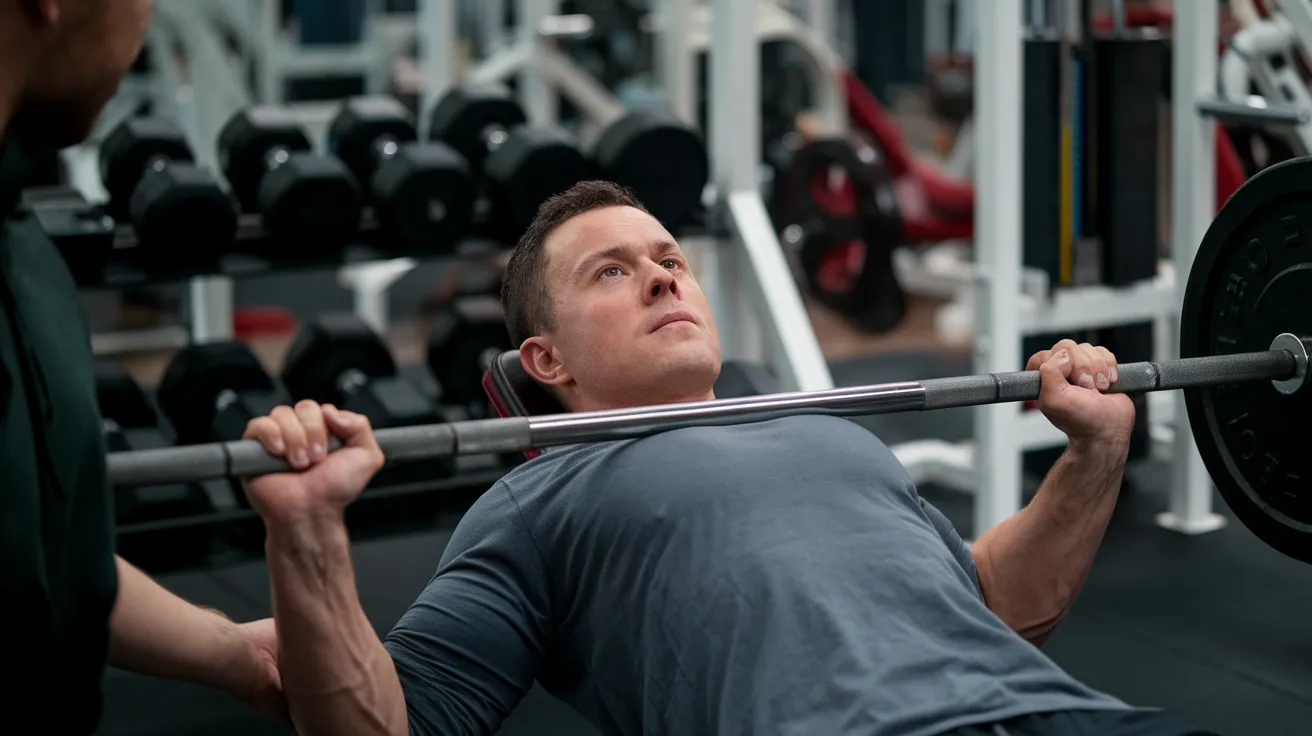

Essential Exercises for Beginners: Where to Start
This post covers the foundational exercises every beginner needs to learn, plus how to perform them with proper form. You’ll get a clear starting point that prevents injury and builds confidence as you progress.

What are the most important exercises for a beginner to learn first? This guide is for anyone starting strength training who wants real results without wasting time. The most important thing to understand is that six basic movement patterns form the foundation of all effective training programs.
Most people assume they should start with machines because free weights seem too hard or dangerous. This is wrong because machines lock you into fixed paths that don’t teach your body how to balance, stabilize, or move naturally under load. Your body needs to learn coordination and control from day one, and only free weight exercises teach these skills properly.
The Six Movement Patterns That Answer What Are the Most Important Exercises for a Beginner to Learn First
Your body moves in six basic patterns. These are the squat, the hinge, the push, the pull, the carry, and the rotation. Every worthwhile exercise fits into one of these categories. Master these patterns and you can train effectively for life.
Each pattern serves a different purpose. The squat builds your legs and teaches you to move up and down safely. The hinge protects your back and strengthens your posterior chain. Pushing movements build your chest, shoulders, and triceps. Pulling movements balance out your upper body and fix poor posture.
Carries build real-world strength and core stability. Rotational movements develop power and protect your spine during twisting motions. Train all six patterns each week and your body develops in a balanced way.
The Squat Pattern Teaches Your Body to Move Under Load
The goblet squat is where every beginner should start. Hold a dumbbell or kettlebell at chest height with both hands. Stand with your feet shoulder width apart. Lower yourself down by bending your knees and hips at the same time. Go as deep as you can while keeping your chest up and heels on the ground.
This exercise teaches you proper squat mechanics before you add serious weight. The weight in front keeps your torso upright naturally. You learn to feel the right muscles working. Your ankles, knees, and hips all learn to coordinate their movement.
Start with three sets of eight to ten reps. Focus on control, not speed. Once you can do three sets of twelve with good form, you’re ready to progress to barbell variations or add more weight.
The Hinge Pattern Protects Your Back for Life
The Romanian deadlift is the best hinge exercise for beginners. Stand holding dumbbells or a barbell in front of your thighs. Keep a slight bend in your knees. Push your hips back like you’re trying to touch a wall behind you with your butt. Lower the weight down your legs until you feel a stretch in your hamstrings.
This movement is not a squat. Your knees barely bend. All the motion comes from your hips. Your back stays straight and strong the entire time. This pattern teaches you how to lift anything off the ground safely.
Most back injuries happen because people bend their spine instead of hinging at their hips. Learn this pattern now and you protect yourself from decades of potential injury. Start light and focus on feeling your hamstrings and glutes do the work.
Pushing Movements Build Your Upper Body Strength
The push up is the first pushing exercise every beginner should master. Start in a plank position with your hands slightly wider than shoulder width. Lower your chest to the ground by bending your elbows. Keep your body in a straight line from head to heels. Push yourself back up to the starting position.
Too hard? Start with your hands on a bench or box. The higher your hands, the easier the exercise becomes. Work your way down to the floor over several weeks. This builds real functional strength that transfers to everything.
The overhead press comes next. Stand holding dumbbells at shoulder height. Press them straight up overhead until your elbows lock out. Lower them back down with control. This builds your shoulders and teaches you to stabilize weight overhead safely.
Pulling Exercises Fix Your Posture and Balance Your Body
The inverted row is perfect for beginners. Set a barbell in a rack at waist height. Lie underneath it and grab the bar with straight arms. Pull your chest up to the bar by squeezing your shoulder blades together. Lower yourself back down with control.
This exercise builds the muscles between your shoulder blades that modern desk work destroys. Your posture improves almost immediately. You build the strength foundation needed for pull ups later. Start with three sets of as many reps as you can do with good form.
The dumbbell row adds another pulling angle. Place one hand and knee on a bench. Hold a dumbbell in your other hand. Pull the weight up to your ribcage by driving your elbow back. Lower it with control. This targets your lats and mid-back muscles.
Loaded Carries Build Strength You Can Actually Use
Pick up something heavy and walk with it. That’s a loaded carry. The farmer’s walk is the simplest version. Grab two heavy dumbbells or kettlebells. Stand up straight. Walk forward for twenty to forty yards. Put the weights down and rest.
This exercise builds your grip, core, and total body stability all at once. Your entire body learns to stay tight under load while moving. This translates directly to real life better than almost any other exercise.
The suitcase carry is another valuable variation. Hold one heavy weight in one hand. Walk while fighting to keep your body from leaning to the side. This builds incredible core strength and teaches your body to resist unwanted movement.
Why These Six Patterns Answer What Are the Most Important Exercises for a Beginner to Learn First
These patterns form the base of every good training program. Learn them now and you never waste time on exercises that don’t matter. You build strength that transfers to sports, daily activities, and more advanced training later.
Each pattern also prevents injuries by teaching your body proper mechanics. The hinge protects your back. The squat protects your knees. Pulling exercises protect your shoulders. These movement skills stay with you forever once you learn them correctly.
Starting with these six patterns means you develop balanced strength. You don’t create muscle imbalances that lead to pain and injury down the road. Your body develops the way it’s supposed to, with everything working together.
How to Program These Movements Into Your Weekly Training
Train three days per week with at least one rest day between sessions. Each workout should include one squat pattern, one hinge pattern, one push, one pull, and one carry. Rotate through different variations to prevent boredom and build well-rounded strength.
A sample week might look like this. Monday: goblet squats, push ups, dumbbell rows, and farmer’s walks. Wednesday: Romanian deadlifts, overhead press, inverted rows, and suitcase carries. Friday: goblet squats, push ups, dumbbell rows, and farmer’s walks again.
Start each exercise with two to three sets of eight to twelve reps. Add weight when you can complete all sets with good form. Rest sixty to ninety seconds between sets. Keep your workouts under forty-five minutes.
Common Form Mistakes That Slow Your Progress
The biggest mistake is adding weight before you master the pattern. Your nervous system needs time to learn proper movement. Rushing this process builds bad habits that take years to fix. Spend at least four weeks on each exercise before increasing weight significantly.
Another mistake is holding your breath during exercises. Breathe out during the hard part of each rep. Breathe in during the easy part. Proper breathing keeps your blood pressure safe and helps you generate more force.
Moving too fast through reps is also common. Control the weight for the entire movement. Lower weights should take two to three seconds. This builds more strength and reduces injury risk. Speed comes later after you master control.
When to Progress to More Advanced Variations
You’re ready to progress when you can perform three sets of twelve reps with perfect form. Perfect means every rep looks exactly the same. Your body stays stable. You control the weight smoothly both up and down.
Progression doesn’t always mean adding weight. You can also choose harder variations of the same pattern. Replace goblet squats with front squats. Replace push ups from the floor with decline push ups. Replace inverted rows with pull up progressions.
Record videos of yourself training. Watch them back and compare to good examples online. This helps you spot form problems you can’t feel during the exercise. Fix these problems before adding more weight or difficulty.
Understanding What Are the Most Important Exercises for a Beginner to Learn First Saves You Years
Most beginners waste months or years on exercises that don’t build real strength. They follow random workouts from social media or copy what other people do at the gym. This approach leads nowhere because it lacks structure and progression.
The six movement patterns give you that structure. Every workout has a clear purpose. Every exercise builds on the others. You develop real strength that makes your life better outside the gym.
These patterns also make future program design simple. Any good program you find will include these six movements in some form. Once you master the basics, you can adapt any training style to fit your goals.
Start with the goblet squat tomorrow and perform three sets of eight reps with just your body weight or a light dumbbell.
Frequently Asked Questions
How long should beginners spend learning these exercises before adding heavy weight?
Spend at least four to six weeks learning each pattern with light weight. Focus on perfect form and control. Your nervous system needs this time to master the movements before you add serious load.
Can you build muscle and strength with just these basic exercises?
Yes. These six patterns work every major muscle group. Many people train with just variations of these movements for years and build impressive strength and muscle. Complexity doesn’t equal better results.
How many days per week should a beginner train with these exercises?
Three days per week works best for beginners. This provides enough training stimulus to improve while allowing adequate recovery. More training doesn’t mean faster results when you’re learning movement patterns.
What weight should a beginner start with for each exercise?
Start with body weight or the lightest dumbbells available. The goal is learning movement patterns, not testing your strength. Add weight only after you master the form and can complete all sets easily.
Do beginners need to do isolation exercises like bicep curls and leg extensions?
No. Compound movements from the six patterns build your entire body effectively. Add isolation work later if needed, but these foundational patterns provide everything beginners need for the first six to twelve months.